 By Tom Billy
Solitaire Spider is a digital card game that offers more than a casual pastime. For those seeking a relaxing escape that also sharpens the mind, it delivers a satisfying challenge. While traditional solitaire is often seen as a light, one-deck distraction, Solitaire Spider elevates the genre by demanding deeper concentration and tactical thinking. Its layered difficulty settings, ranging from beginner-friendly to brain-bending, create a flexible experience that adapts to any moment you need to take a mental breather.
Unlike its classic cousin, Solitaire Spider uses multiple decks and requires completing suits in descending order before they can be cleared. This added complexity introduces a different rhythm and flow. You’re not just flipping cards and hoping for a match, you’re constantly assessing your moves and trying to predict how each card will affect your long-term success. The game tests memory, spatial awareness, and sequencing, making it an ideal go-to for anyone who enjoys puzzles with a hint of pressure and purpose.
The Mechanics That Make Solitaire Spider Engaging
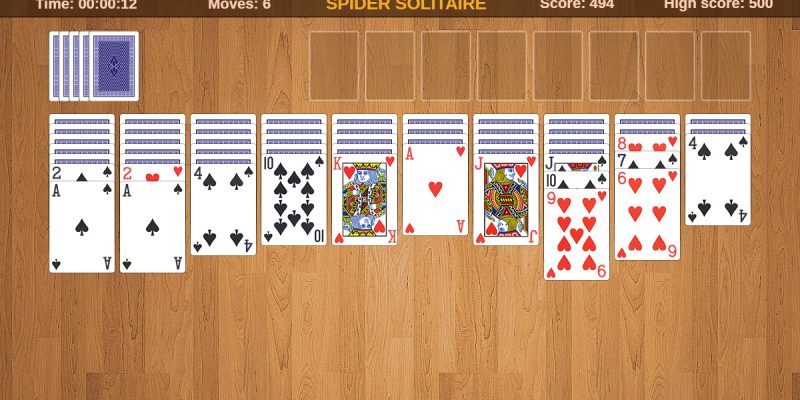
The game begins with a tableau of ten columns, filled with cards from multiple suits. The goal is to arrange full sequences of the same suit from King down to Ace. Once a complete set is arranged, it disappears from the board, clearing space and bringing you closer to a win. It’s a simple objective but with a web of decisions in between. As you advance through the difficulty settings from one suit to all four each game becomes less about chance and more about calculated foresight.
Solitaire Spider builds strategy into every move. One wrong card placement can block a whole column, or worse, trap a useful card behind a clutter of mismatched suits. There’s a rhythm to learning how to uncover hidden cards, when to consolidate empty piles, and how to preserve space for potential shuffles. These micro-decisions keep the game feeling rewarding. It’s never just a mindless tap-through.
The shuffle option, which lets you draw new cards onto the tableau, can become both a relief and a source of tension. You’re never quite sure what you’re going to get, especially when you’re working with multiple suits. This controlled unpredictability ensures that even seasoned players can never fully rely on muscle memory or routine. Each round of Solitaire Spider feels distinct, which keeps engagement high even across repeated sessions.
Mental Benefits of Playing Solitaire Spider
What makes Solitaire Spider such an effective tool for relaxation is that it fosters a state of low-pressure focus. While the game challenges you to think ahead, its solo nature means you’re never penalized for experimenting. You can always undo a move, reshuffle a strategy, or simply start over without consequence. This creates a gentle mental environment where decision-making is encouraged but not overwhelming.
The level of concentration required to progress in Solitaire Spider helps players enter a state of mindful attention, similar to that experienced during meditation or deep reading. Your brain shifts away from external distractions and enters into a quiet state of problem-solving. This momentary detachment from the stressors of daily life gives your mind space to reset and recharge. It’s an especially appealing option for people who want to stay mentally active without feeling overstimulated by noise or pressure.
Solitaire Spider also rewards persistence. It’s not uncommon to get stuck and then find a surprising sequence that turns the tide in your favor. That sense of discovery fuels motivation and helps reinforce patience. For anyone who wants to build concentration skills or simply slow their mental pace for a few minutes, Solitaire Spider offers just the right blend of challenge and calm.
Why Solitaire Spider Is More Than a Game
Solitaire Spider stands out because it adapts to your level of attention. If you’re looking for a light distraction, the single-suit version can give you that without making you feel like you’re zoning out. If you need something more involved, increasing the number of suits adds an extra layer of planning and patience. This scalability makes the game more than just a fixed puzzle; it becomes a flexible tool that you can turn to for different moods and levels of mental energy.
Many people incorporate Solitaire Spider into their daily routines as a form of mental reset between work sessions. Whether it’s five minutes after a long call or a mid-day decompression ritual, the game fills a unique space. It offers something to do with your hands and eyes that’s not tied to productivity or overstimulation. You’re playing, but also thinking. You’re relaxing, but also solving. This dual function helps it stand out among other digital diversions.
Accessibility is another factor that adds to Solitaire Spider’s lasting appeal. It’s available across a range of devices and doesn’t require high-performance systems or fast internet. You can jump into a game during a commute, waiting for a meeting, or winding down before bed. It doesn’t demand a significant time investment and doesn’t flood you with in-game distractions. It simply invites you to play, think, and breathe.
A Digital Pastime That Sharpens the Mind
Solitaire Spider is part of a quiet genre of digital games that do more than fill idle moments they enhance them. In the same way a crossword stretches your vocabulary or Sudoku trains your logic, Solitaire Spider strengthens your ability to think strategically under light pressure. The moves matter, but not enough to cause stress. The outcome is important, but never urgent.
Its design encourages a certain kind of mindfulness. You’re not swiping mindlessly or chasing a scoreboard. Instead, you’re navigating a calm, structured challenge that resets your focus. That combination of structure and freedom is rare in today’s digital entertainment landscape. It’s what gives Solitaire Spider its staying power and what makes people return to it, game after game.
Whether you’re new to digital card games or have years of experience with solitaire variations, Solitaire Spider offers a compelling blend of logic and relaxation. It’s a step up from the ordinary, not in complexity alone, but in the way it turns each move into a quiet act of intention. For those looking to take a break that feels as fulfilling as it is easy, this game remains one of the most reliable choices in digital play.