 By Tom Billy
The roof of a commercial building is its first line of defence against the elements, and in Perth’s climate — hot, dry summers followed by concentrated winter rainfall — that defence is tested in a very specific pattern. Months of UV exposure, thermal expansion and contraction, and debris accumulation during the dry season, then sudden, heavy rainfall that tests every gutter, flashing, and drainage outlet simultaneously.
When commercial roofing maintenance is done well, this cycle is managed proactively. When it’s deferred, the dry season’s accumulated damage announces itself during the first winter storm — through leaks, overflow, water ingress, and the cascade of interior damage that follows.
This guide covers what commercial roofing maintenance actually involves, why it matters for building owners and managers in Perth, and how to structure a maintenance programme that keeps the building envelope performing reliably across the full range of the city’s seasonal conditions.
What commercial roofing maintenance covers
Commercial roofing maintenance is not a single task — it’s a programme of inspection, cleaning, minor repair, and compliance checks that together keep a roof system performing at the level it was designed to deliver.
For most commercial buildings in Perth, a comprehensive maintenance programme covers the following elements:
- Roof surface inspection — checking all roofing sheets, panels, or membrane for cracking, corrosion, deterioration, or physical damage
- Flashing inspection and resealing — examining all flashings at penetrations, edges, ridges, and wall junctions; resealing any gaps or lifting sections
- Gutter and valley cleaning — removing debris from all gutters, valley gutters, and internal box gutters to ensure drainage capacity is maintained
- Downpipe inspection and clearing — confirming all downpipes are clear and discharging correctly to stormwater
- Fastener inspection — checking screws and fixings on metal roofing for corrosion and seal integrity; replacing any failed fasteners identified
- Skylight and translucent panel condition — assessing polycarbonate or fibreglass panels for UV degradation, crazing, or frame seal failure
- Roof-level penetrations — inspecting all HVAC, exhaust, and service penetrations for flashing integrity and seal condition
Why Perth’s climate makes proactive maintenance non-negotiable
Perth’s seasonal pattern creates a specific roofing maintenance risk that building owners outside WA may not appreciate. The seven to eight months of dry, hot conditions that characterise Perth’s summer and autumn are not benign from a roofing perspective — UV radiation degrades sealants, thermal cycling stresses flashings and fasteners, and debris accumulates in gutters and drainage outlets with nothing to flush it through.
The problem becomes apparent when Perth’s rainfall arrives — typically beginning in earnest in June. A roof drainage system that’s been compromised by summer conditions and blocked by dry-season debris faces sudden, concentrated demand. The result, in buildings without a pre-winter maintenance visit, is frequently gutter overflow, water ingress at compromised flashings, and interior water damage that could have been prevented with an inspection carried out the month before.
The timing of commercial roofing maintenance in Perth therefore matters as much as the maintenance itself. An inspection and service visit in April or early May — after summer’s thermal stress has done its work but before winter rainfall begins — is the optimal point in the annual cycle. This timing allows identified issues to be addressed before the roof is tested under live rainfall conditions.
Common commercial roofing issues in Perth buildings
Perth’s commercial building stock is diverse, ranging from post-war industrial sheds with original corrugated iron roofing to modern commercial premises with membrane-covered flat roofs and complex internal drainage systems. The defects most commonly identified during commercial roofing maintenance inspections include:
Flashing failure
Flashings are the most common single point of failure in commercial roofing. They seal the junction between the roof surface and penetrating elements — pipes, vents, HVAC equipment, skylights, and parapet walls — and they’re subject to more thermal movement and UV exposure than any other roof component. Cracked sealant, lifting flashings, and corroded flashing materials are found on virtually every commercial roof inspection.
Gutter and valley corrosion
Metal gutters corrode from the inside out, driven by the accumulation of debris, moisture, and the organic acids produced by decomposing leaf matter. Box gutters and valley gutters on older Perth commercial buildings are particularly prone to corrosion perforation — which allows water to bypass the drainage system entirely and enter the building at the gutter-to-wall junction.
Fastener deterioration
On metal sheet roofing, the screws and rivets securing sheets to purlins are exposed to moisture and thermal cycling continuously. As fastener seals degrade, they create water entry points that are easy to miss from ground level but easily identified on a proper close inspection. Mass fastener replacement is a common maintenance task on commercial metal roofs over 15 years old.
Membrane and waterproofing deterioration
Flat and low-pitch roof sections — common on building extensions, plant rooms, and canopy areas — rely on membrane waterproofing systems that have finite service lives. Membrane delamination, joint separation, and surface cracking are progressive failures that accelerate once they begin. Early identification during maintenance inspections allows planned repair rather than emergency response after significant water ingress has occurred.
Commercial roofing maintenance for strata properties
Strata-titled commercial and mixed-use buildings present specific roofing maintenance obligations that strata companies and owners’ corporations need to understand. The roof is generally common property — meaning its maintenance is the collective responsibility of all lot owners, managed through the strata company.
When roofing maintenance is deferred in a strata building, the consequences are shared. A roof leak that damages a common area or penetrates into a lot owner’s ceiling creates a maintenance liability and potential compensation obligation that the strata company must manage. Documented evidence that regular maintenance was carried out is the primary protection against these disputes.
For strata buildings in Perth, a commercial roofing maintenance programme should be built into the annual maintenance budget and scheduled consistently — not deferred when levies are under pressure, because the cost of the deferred maintenance invariably exceeds the cost of the maintenance itself.
What to expect from a professional commercial roofing maintenance service
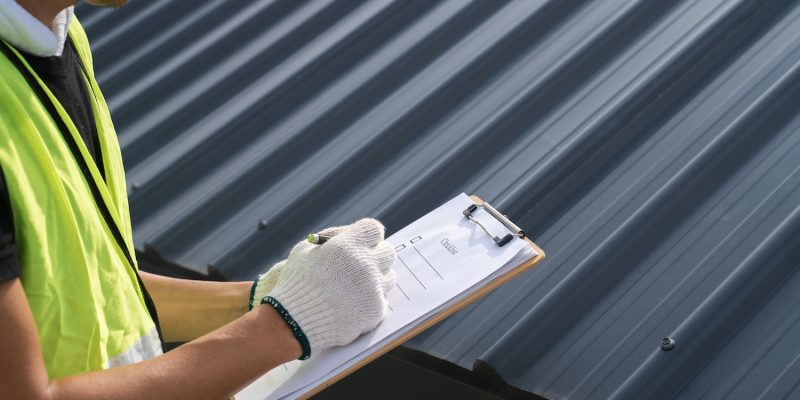
A professional commercial roofing maintenance visit should produce more than a cleaned gutter. The service should include a systematic inspection of all roof components with findings documented in writing, photographs of any identified defects, a clear severity assessment, and recommended actions with priority ranking.
Minor maintenance tasks — cleaning gutters and downpipes, resealing minor flashing gaps, replacing isolated failed fasteners — should be carried out as part of the maintenance visit. Significant repair work identified during the inspection — replacing corroded gutter sections, recoating membrane areas, replacing failed skylights — should be scoped separately and presented as a prioritised repair proposal.
Over time, these inspection reports build a maintenance history for the roof that is valuable for asset management, insurance renewals, and any future sale or due diligence process. A building with a documented maintenance history commands more confidence than one where the roofing condition is unknown.
Conclusion
Commercial roofing maintenance in Perth is not a discretionary spend. It’s a structured response to the specific conditions that Perth’s climate creates — conditions that reward consistent, timely maintenance and penalise buildings where the roof is out of sight and out of mind until winter arrives.
For building owners and managers, the practical steps are clear: schedule an annual inspection timed before the winter rainfall season, act on identified defects before they become failures, and maintain the documentation trail that demonstrates appropriate care of the building envelope. Buildings managed on this basis consistently avoid the expensive roofing emergencies that less-maintained properties face season after season.