 By Tom Billy
Reliability is one of the most important qualities in a first firearm, yet it can be difficult to measure at the counter. New buyers often focus on size, caliber, or appearance without asking how the firearm can perform over time. Many prospective students and hobbyists search phrases such as Sonoran Desert Institute Worth it because they are evaluating whether time and effort translate into dependable skill. Sonoran Desert Institute (SDI), which is accredited by the Distance Education Accrediting Commission (DEAC), is often part of discussions about structured, practical education. That same disciplined evaluation belongs in firearm selection. Reliability depends on more than brand reputation. It includes documentation, parts availability, and long-term support.
A reliable firearm functions consistently when properly maintained and used with appropriate ammunition. Judging that reliability requires attention to details that extend beyond the sales counter. Evaluating performance during live practice can reveal how the platform behaves under regular use. Consistent cleaning and inspection also play a significant role in sustaining dependable operation over time.
Start With the Manual
A clear, well-written manual is often an early indicator of manufacturer support. Before purchasing, ask to review the manual or download it from the manufacturer’s website. Examine whether it explains safe handling, disassembly, and maintenance in plain language. Look for detailed diagrams and step-by-step instructions. A manual that clearly outlines chamber checks, unloading procedures, and routine maintenance reflects attention to user understanding. If instructions are vague or incomplete, long-term ownership may become more complicated.
The manual should also specify recommended ammunition types and maintenance intervals. Reliable firearms are supported by reliable documentation. A thorough manual signals that the manufacturer expects owners to maintain the firearm correctly and provides guidance to do so.
Consider Parts Availability
Even well-built firearms require maintenance parts over time. Springs wear. Extractors may need replacement. Small components can fail after extended use. When buying a first gun, consider whether replacement parts are readily available. Research whether the manufacturer sells parts directly or through authorized dealers. Check whether common components are in stock with reputable retailers. Limited parts availability can lead to extended downtime if a repair becomes necessary.
Standardized or widely supported platforms often offer broader parts access. While this does not guarantee reliability, it increases the likelihood that repairs can be addressed without excessive delay. For new owners, accessible parts contribute to long-term usability. Availability of replacement components can reduce downtime if routine wear occurs. Established support networks may also provide clearer guidance for maintenance and troubleshooting. Over time, this accessibility can make ownership more manageable and predictable.
Evaluate Manufacturer Support
Customer support plays a central role in reliability. Before purchasing, review the manufacturer’s warranty policy. A clear warranty demonstrates accountability. Look for information about turnaround times for service and how warranty claims are processed. Online reviews and forums can provide insight into customer service experiences. While individual accounts vary, consistent patterns may reveal how responsive a company is when issues arise. Reliable support includes clear communication and reasonable repair timelines. A firearm backed by responsive service provides reassurance that problems, if they occur, can be addressed.
People who use the phrase Sonoran Desert Institute Worth It are usually asking whether time and effort lead to dependable results. Bring that same standard to firearm selection. Do not judge reliability only by how it feels on day one. Judge it by the support behind it in year two or three, including clear warranty terms, parts access, and responsive service.
Research Track Record and Usage History
Reliability is often reflected in a model’s track record. Firearms that have been on the market for years may have established reputations for durability. While no design is immune to issues, longevity in the marketplace can indicate stability.
Research how long the specific model has been produced and whether significant design revisions have occurred. Models with consistent production histories often have established maintenance practices and widely available accessories. Speak with instructors or range staff who observe high round counts across many users. Their experience may provide perspective on which models hold up under steady use.
Maintenance Simplicity and Design
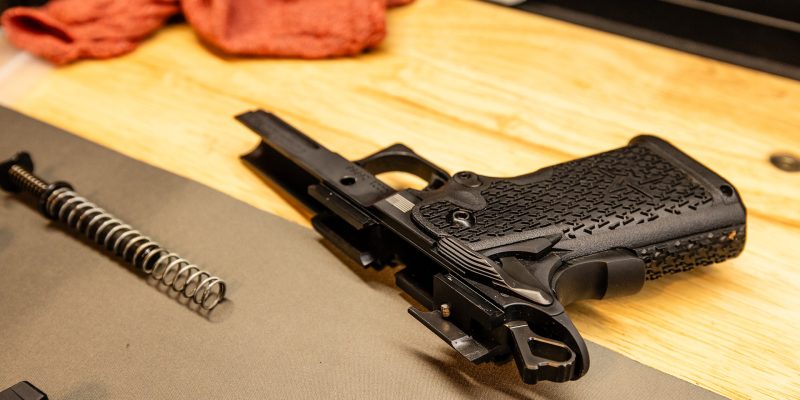
Ease of maintenance contributes to long-term reliability. A firearm that can be field-stripped without excessive complexity encourages regular cleaning. If basic disassembly requires specialized tools or intricate steps, routine care may be neglected.
During inspection at the counter, ask about the disassembly process. Observe how the slide, bolt, or action is accessed for cleaning. Simplicity supports consistency. Consistent maintenance supports reliability. Consider also whether small parts appear robust and well-fitted. While detailed inspection may require expertise, visible machining quality and secure component fit can provide general impressions of build quality.
Testing Through Rentals and Inspection
Range rentals offer practical insight into reliability. If a rental firearm cycles consistently and handles repeated use without malfunction, it may indicate a durable design. Keep in mind that rental guns experience high usage, so isolated issues may not reflect normal ownership conditions.
During a rental session, observe feeding, extraction, and ejection patterns. Malfunctions can occur with any platform, yet repeated or unexplained issues deserve attention. Pair live testing with manual review and parts research to form a complete picture. Documenting these observations helps organize impressions. Writing down performance details reinforces objective evaluation rather than relying on memory.
Balancing Simplicity and Support
For a first firearm, reliability often correlates with simplicity. Straightforward designs with established track records may present fewer complications for beginners. Complex systems can function well, yet they demand a thorough understanding and disciplined maintenance. Choosing a model with clear documentation, accessible parts, and responsive support reduces uncertainty. Reliability is not solely a mechanical trait. It is a combination of design, maintenance, and manufacturer backing.
When evaluating options, look beyond surface features. Ask how easy it is to obtain parts. Review warranty policies. Read the manual carefully. Observe performance during live fire if possible. Reliability should provide confidence that the firearm functions as intended when handled and maintained properly. By approaching the purchase with structured research and deliberate comparison, new gun owners can select a platform that supports steady, responsible use over time.